A Few of My Favorite Roles

Okay, since I’ve been involved in theatre for nearly my entire life and am one of the hosts of The Art and Business of Community Theater (which, as of this writing at least, is still the only podcast dedicated to advancing community/amateur theater) I figure it’s about time to list a few favorite roles I’ve had the privilege to perform over the years:

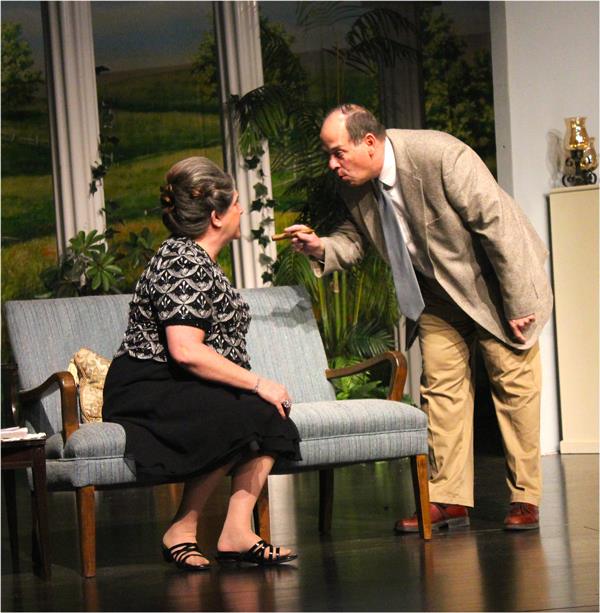
  1. Pseudolus from A Funny Thing Happened on the Way to the Forum: based on the number of times I’ve done this role (three) it’s clearly my favorite and one I would do again in a heartbeat if offered the chance. As the protagonist of this classical musical farce Pseudolus has the most action, words, and songs, but I would argue he also has the most fun. The character has been played on Broadway by the late great Zero Mostel, Phil Silvers (who originally turned down the part), Nathan Lane, and, for one Tony Award winning scene, Jason Alexander among other notable actors. Interestingly enough, the character is based on an actual ancient Roman character created by Plautus.
  2. Oliver Warbucks from Annie: I played “Daddy Warbucks” twice! IYKYK.
  3. Big Daddy from A Cat on a Hot Tin Roof: the other daddy wasn’t nearly as nice as Warbucks ended up being. Who doesn’t love to play on of Tennessee William’s best known characters – though I’m sure I didn’t hold a candle to Burl Ives’ perfect portrayal in the movie.
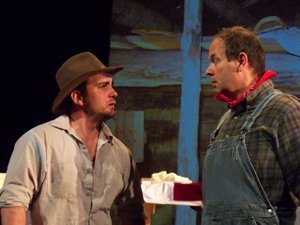
  4. Lenny from Of Mice and Men: though I didn’t, and don’t, have the imposing stature of Lenny as described in the novella, the director managed to find a cast that was, with one notable exception, smaller and shorter than me so it all worked out in the end. The biggest complement I got was afterwards when a friend who had a sister who was special needs told me that I played Lenny with dignity and without making a caricature of him as so often happens.
  5. Rudolph the Red Nosed Reindeer from an unnamed elementary school play: the first role I was cast in back in fourth grade. No lines but I think I managed to get the deep pathos of the character across.
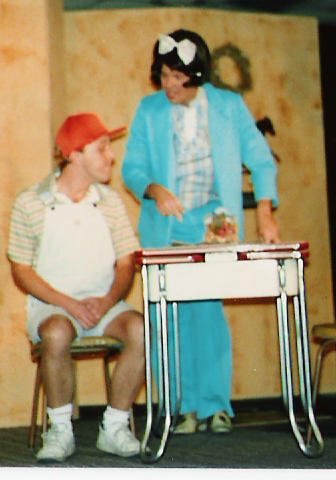
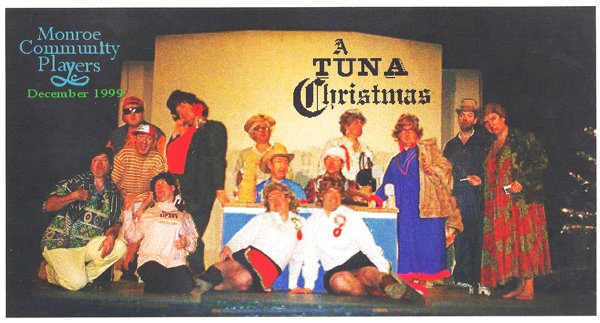
  6. Bertha Bumiller and the gang from the Tuna series: I’ve had the pleasure of being in all four of the Greater Tuna plays (Greater Tuna, A Tuna Christmas, Red, White and Tuna, and Tuna Does Vegas) so though Bertha is my favorite in these series of two-performer plays (usually two men) I’ve played several of the characters up to four times.
  7. Albert from Escanaba in ‘Da Moonlight: He’s da epitome of a perfect Yupper. I said “Yupper” not “Yuppie,” two different tings. Look it up.
  8. Poppa Goat from The Billy Goats Gruff: the first role I remember playing in a masterwork that I wrote, produced, and directed in my parents’ back yard with my siblings and kids from the neighborhood to the everlasting delight of our collective parents. All who paid a dime to watch us perform!

These are the roles that first came to mind when I decided to share a list of my favorites. But there have been may others. That’s the beauty of community theatre. Stick with it and you’ll play more roles than Hollywood’s biggest stars could ever dream of! Who needs fame and fortune when you can play Jonathon Brewster, Teddy Brewster, and Dr. Einstein in three different productions of “Arsenic and Old Lace?”

I’d love to see what your favorite roles have been! Maybe we even have a few in common.
The Purpose of Theatre*

I think that it is fair to say that theatre is essential to human existence. It has been around for nearly as long as civilization has existed in multiple forms from religion to pure entertainment. In fact, most popular forms of entertainment today – movies and television for example – have their origins in live theatre.

A Public Art

It’s also fair to say that theatre is common in most communities. You may never get to be a part of a Broadway audience, you might not even get to a large regional production, but most of us have been to a local community theatre and certainly a high school, elementary, or even church performance of some kind (I’m talking Christmas pageants by the way, not the regular Sunday service). Theatre in some form or another is ubiquitous in our society. It is not, as often ironically portrayed on stage, films or television, an activity of the idle rich. It is an accessible art form with millions of participants and as such is uniquely able to serve as a public forum for thought and ideas.

How Theatres Choose Their Seasons

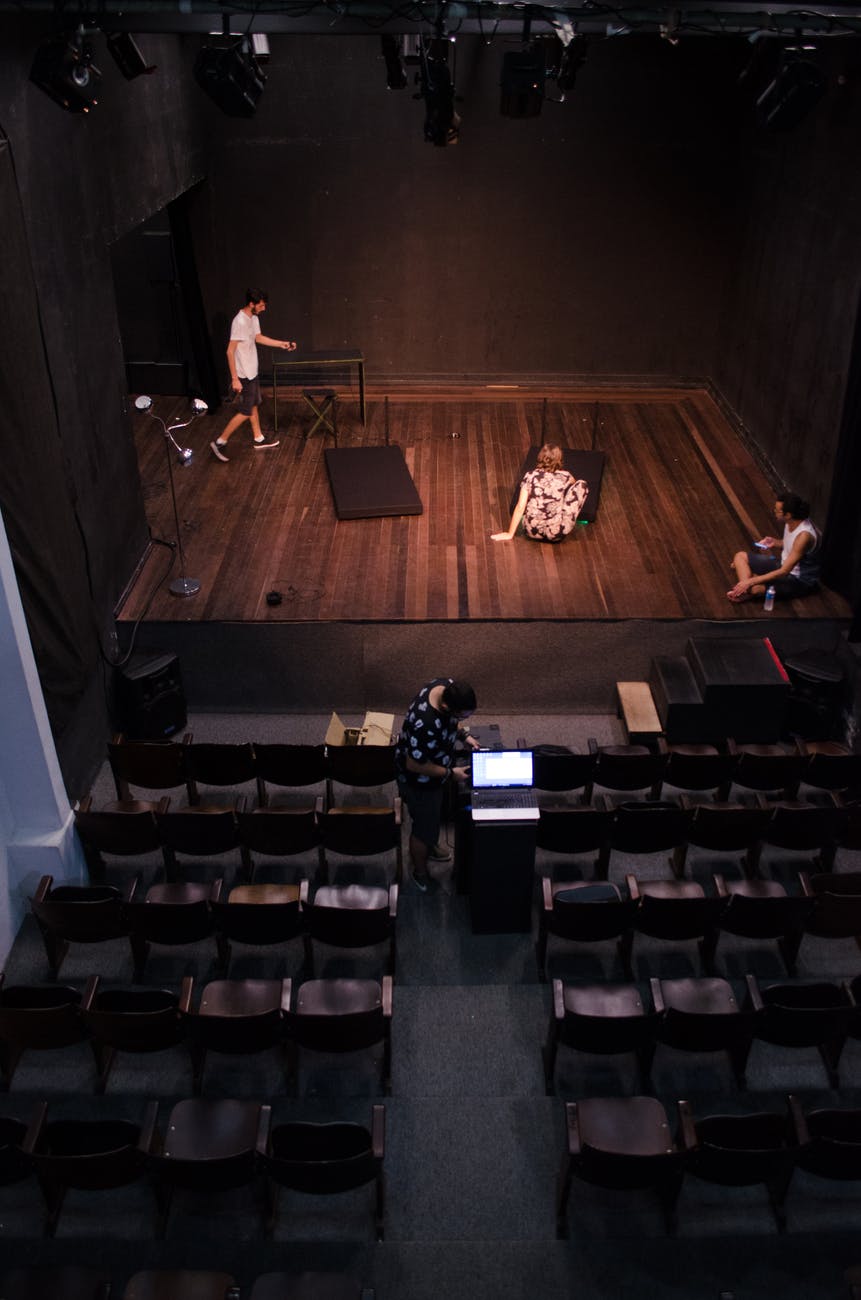
Photo by Ruca Souza on Pexels.com

Now, a few of you involved in theatre may disagree with what I’m about to say. But, I have been active in theatre nearly my entire life. I was in school plays, going back to elementary, some college classes and started a Reader’s Theatre Group as a student, and a ton of community theatre for the past 39 years. My community theatre work includes acting, writing, directing, etc. and I’ve served on multiple boards of groups at both the local and state level. This broad experience has allowed me to make note of some similarities among theatre groups. Especially among smaller groups which do not have abundant resources and endowments to draw upon.

I have heard the same basic arguments from different theatre boards and members when selecting shows, especially when the bank accounts get a little low. The discussion tends to center around what shows will sell. So as a result, because of the pervasive belief that casting children in shows sells tickets, many seasons of smaller struggling groups tend to be filled with children’s theaters, musicals, or the holy grail of ticket sales, musicals with children!

The Real Question Theatres Should Ask Before Selecting a Show

A question that I think theatres don’t ask enough is what is the purpose of theatre? And, just as important, how is that purpose being fulfilled? Regardless of how you answer these questions I think we will all agree that the purpose of theatre is not to sell tickets. Selling tickets is just a tool to raise funds to help us fulfil the higher purpose of our craft. It is an unfortunate fact that all groups need funding to continue to put on shows. But has your group become dedicated to just selling tickets? I believe that the purpose of theatre is to show a slice of the human condition in a safe environment and to give the audience something to reflect on and think about long after the final curtain call. If your board’s only goal is to make money without consideration of the important voice that theatre has are they doing the right thing?

Obligation to the Community – More than Frivolity

All theatres have an obligation to their communities and that obligation is not just to present shows that are entertaining or that can be easily cast. It means that on occasion at least that your group should be doing what I would call difficult pieces. Works that are often not associated with community theatre in fact because they are too controversial or use “bad” language (gasp). Works that deal with the troubling questions of our day like gun violence, homelessness, sex abuse, inclusiveness, and so on and so forth. I maintain that as soon as a member of your theatre’s board says something along the lines of “that won’t sell tickets” or “our community isn’t ready for this show” then that is exactly when you should produce it!

A Place for Every Type of Show

Now I’m not being dismissive of children’s theatre or musicals. Both have their place and both can also be educational and thought provoking. In fact, the best scripts and productions always are. Even old standbys like The Music Man are full of social commentary and you don’t have to dig deep to find it. But if your only purpose in picking a show is because you think it will sell tickets you are missing out on an opportunity to not only help further educate your audience – and I bet your theatre is organized as an “educational” 5019c)3 – but to develop an entirely new audience as well.

Risk and Reward?

Will your risk pay off? In terms of finance, possibly not the first time or two you perform something a little more daring. But in the long run, I think your community will learn to appreciate the intellectual debate that your productions inspire.

There you have it, my two cents. I’d love to learn what you think on this issue. Am I right on or all wet? Let me know in the comments and get the discussion started!

Admittedly, some shows are harder to justify as thought provoking than others. But sometimes just having fun is okay, too! The cast of Monroe Community Players’ production of Gilligan’s Island. Photo by Robert Yoman.

All photos by David P. Wahr unless otherwise noted in which case the original artist retains all rights. Otherwise photos and words @copyright by David P. Wahr

*I don’t use the word “theatre” with the “re” for any hoity toity artistic reason. I use that word to describe the act or art of putting on a play. If I’m using the word “theater” I’m talking about the performance space. I just find it an easy way to distinguish between the two.